

Burnout Recovery: The whole truth, and nothing but the truth ... receipts included.
Burnout isn't a bad week, and it isn't fixed by a sound bath. It's a clinical state with a WHO diagnosis code, and it responds to specific, unglamorous things that genuinely work. Here's the honest version of what helps, with the evidence to back it. No woo-woo, no upsell.
Start here
What is burnout?
Burnout is a state of exhaustion caused by prolonged, unmanaged stress. The World Health Organization classifies it as an occupational phenomenon, not a mental illness, under ICD-11 code QD85.
Recovery is not a rest day. It generally means reducing the load, restoring sleep and nervous system regulation, and rebuilding capacity in a structured way over weeks to months. How long depends on how long you have been running on empty.
This page is your map
You probably arrived here after searching something like 'am I burnt out' at an hour you should have been asleep. Most of what comes back is either a listicle or a sales pitch dressed up as advice.
So this page maps the whole thing out: what burnout is, how to work out where you sit, what the evidence says helps, and where to go next depending on how bad things have got. Three of the four places we point you are free, and you can use the lot without ever speaking to us.
Who this is for
You are not being dramatic
This page is built for people at any point on the slope, not just the ones at the bottom of it.
- People who are properly burnt out and know it
- People who can see it coming
- People performing fine but running on fumes
- Carers, who tend to run dry first and ask last
- Clinicians and professionals who should have spotted it and didn't
- Anyone who has been told to 'practise self care' and wanted to scream
Burnout has a signature
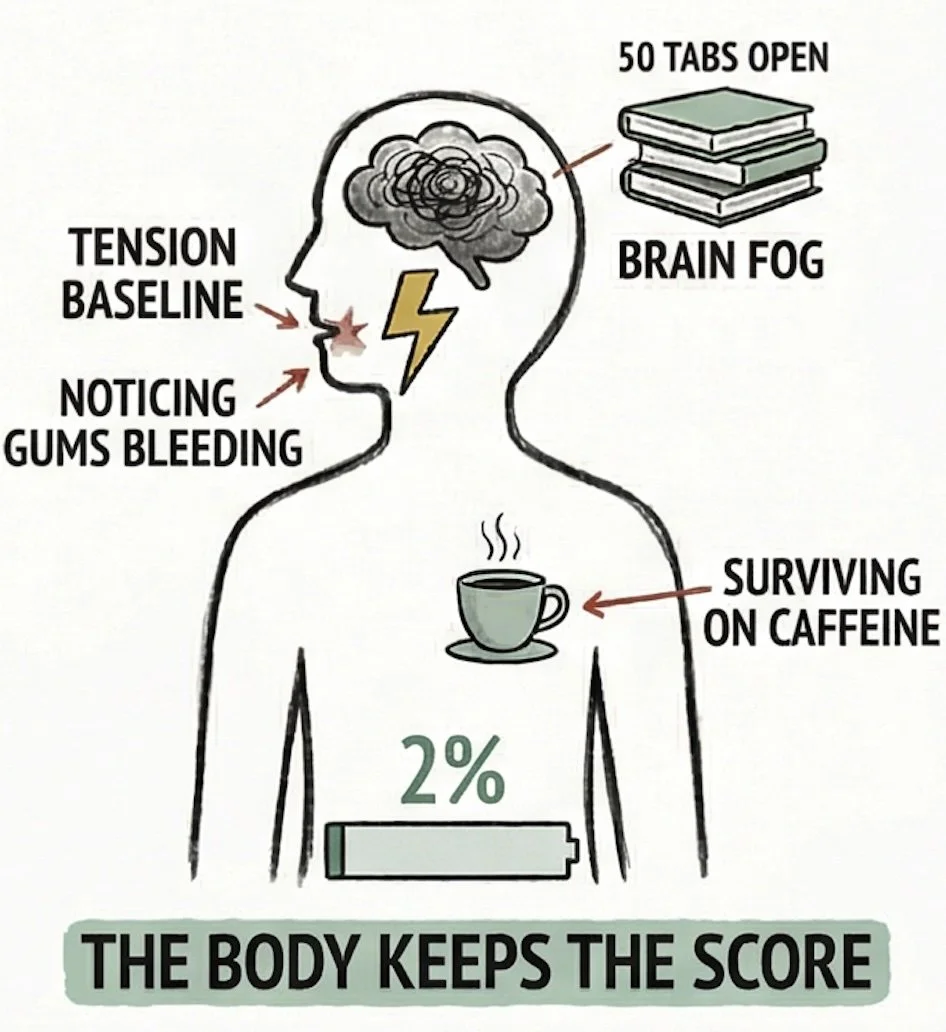
It shows up in the body, not just the mood
This is the part people underestimate. Burnout is not just how you feel about work. It turns up in things a clinician can actually measure: cortisol, inflammatory markers like CRP and IL-6, heart rate variability, and what your sleep is doing between two and four in the morning.
Which matters for one very practical reason. If the problem is physiological, the fix has to be physiological too. Willpower, a fortnight in Bali and a nicer planner will not shift a single one of those numbers.
Sources: Beyond Blue (2025); World Health Organization, ICD-11 QD85; Maslach & Leiter, World Psychiatry (2016); MRI prefrontal-cortex studies. Full reference lists sit on the burnout assessment and the 5-day programme pages.
When this page can help
Where you are changes what you should do next
A practical map, not a clinical staging system. Most people recognise themselves in one of these four. If you are not sure which, that is exactly what the assessment is for.
Swipe →
You can feel it coming
Still functioning, still delivering, but the tank empties faster than it fills. Weekends reset you less than they used to.
Sleep no longer fixes it
Tired on waking. Small tasks feel heavy. Patience and focus have quietly narrowed, and you have started to normalise it.
Your body is making the decisions
Getting through the day takes everything. This is the point where people stop being able to choose to push on.
You are out the other side
Recovery is not a finish line. Whatever took you there is still part of you, so staying well takes ongoing attention rather than a one-off fix.
Four ways in
Start where you are, not where a sales funnel says you should
These are not sequential steps. They are four doors into the same room. The assessment tells you where you sit, the handbook explains the mechanism, the library goes deeper on specifics, and the programme is the structured version of the lot.

The burnout assessment
Ten questions drawn from the Copenhagen Burnout Inventory and the Perceived Stress Scale. Two minutes, private, and no sign-up to see your score.
Find out where you sit →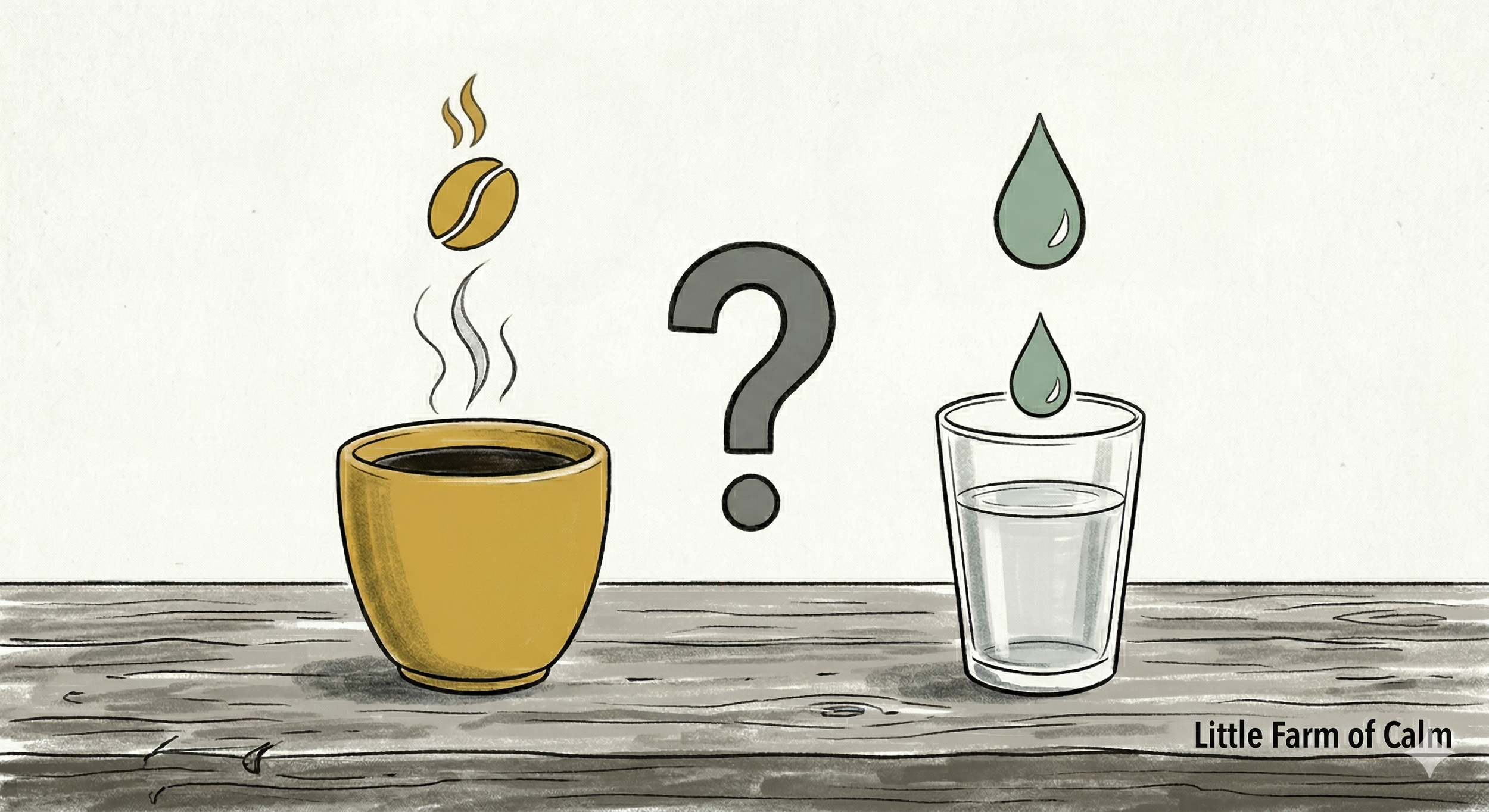
The Burnout Recovery Handbook
Why burnout and tiredness are not the same thing, why willpower will not fix it, what the evidence says works, and how to catch the relapse pattern early. Free, and the best place to start.
Get the handbook →
The burnout library
Plain-language articles on the symptoms, the science, and the difference between what feels restful and what measurably shifts your physiology. Free to read.
Browse the library →
The 5-day Burnout Prescription
Physio-led recovery in Benalla, two hours from Melbourne. For when reading about it is no longer going to be enough.
See the programme →Before you go further
What this isn't
We would rather tell you now than waste your time.
Swipe →
Not a diagnosis
The assessment is a screening tool, not a clinical diagnosis. If something feels seriously wrong, your GP is the right first call, and we will say so.
Not mental health treatment
Burnout is an occupational phenomenon, not a mental illness. We work in burnout recovery. We are not a substitute for psychological care, and we will not pretend otherwise.
Not a cure you can buy
No workshops, no sharing circles, no lifestyle talks. Recovery isn't a pill, it's a journey, and most of the work happens in your real life, not on a retreat.
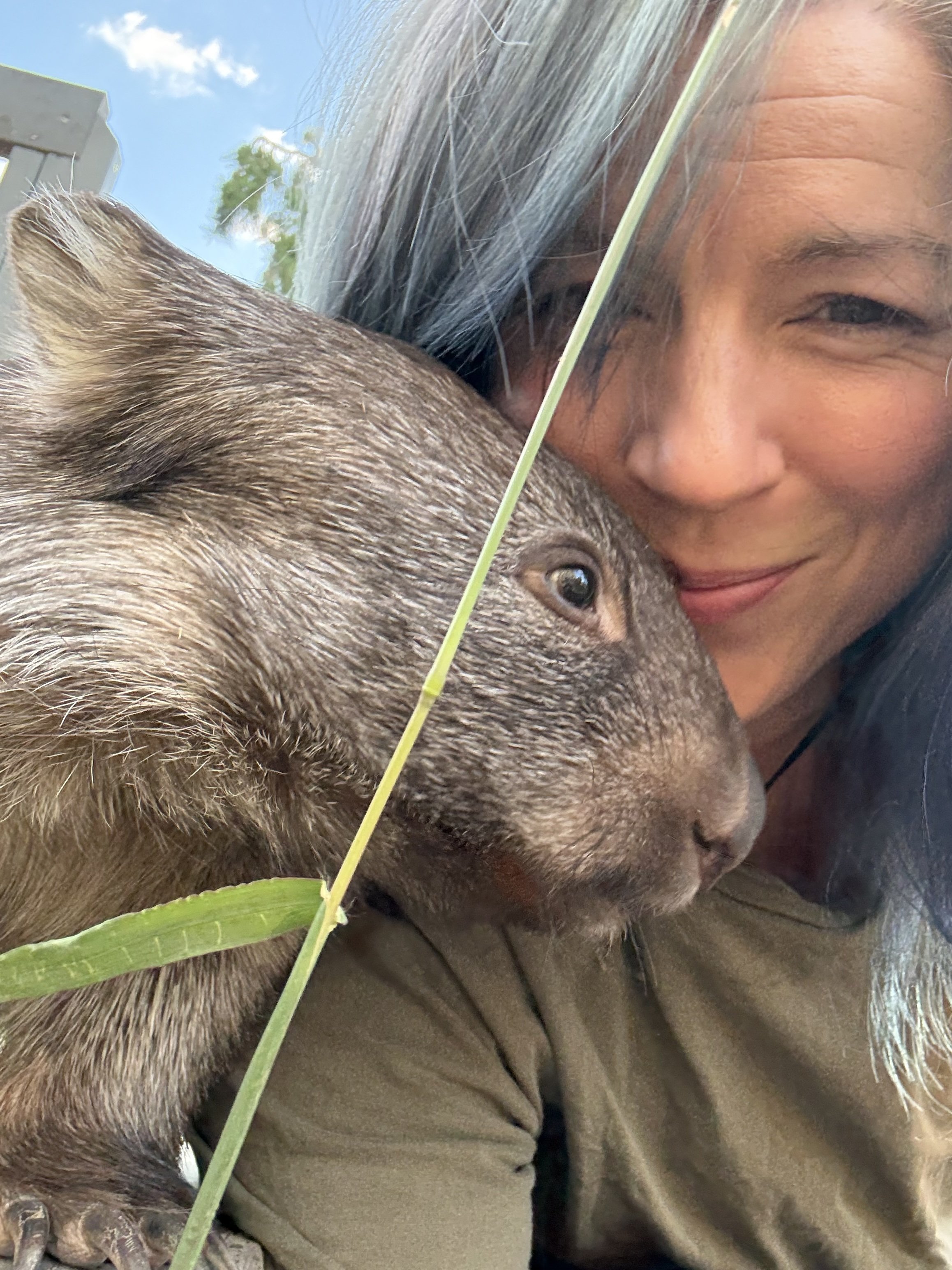
Who is behind this
Built by someone who missed it in herself
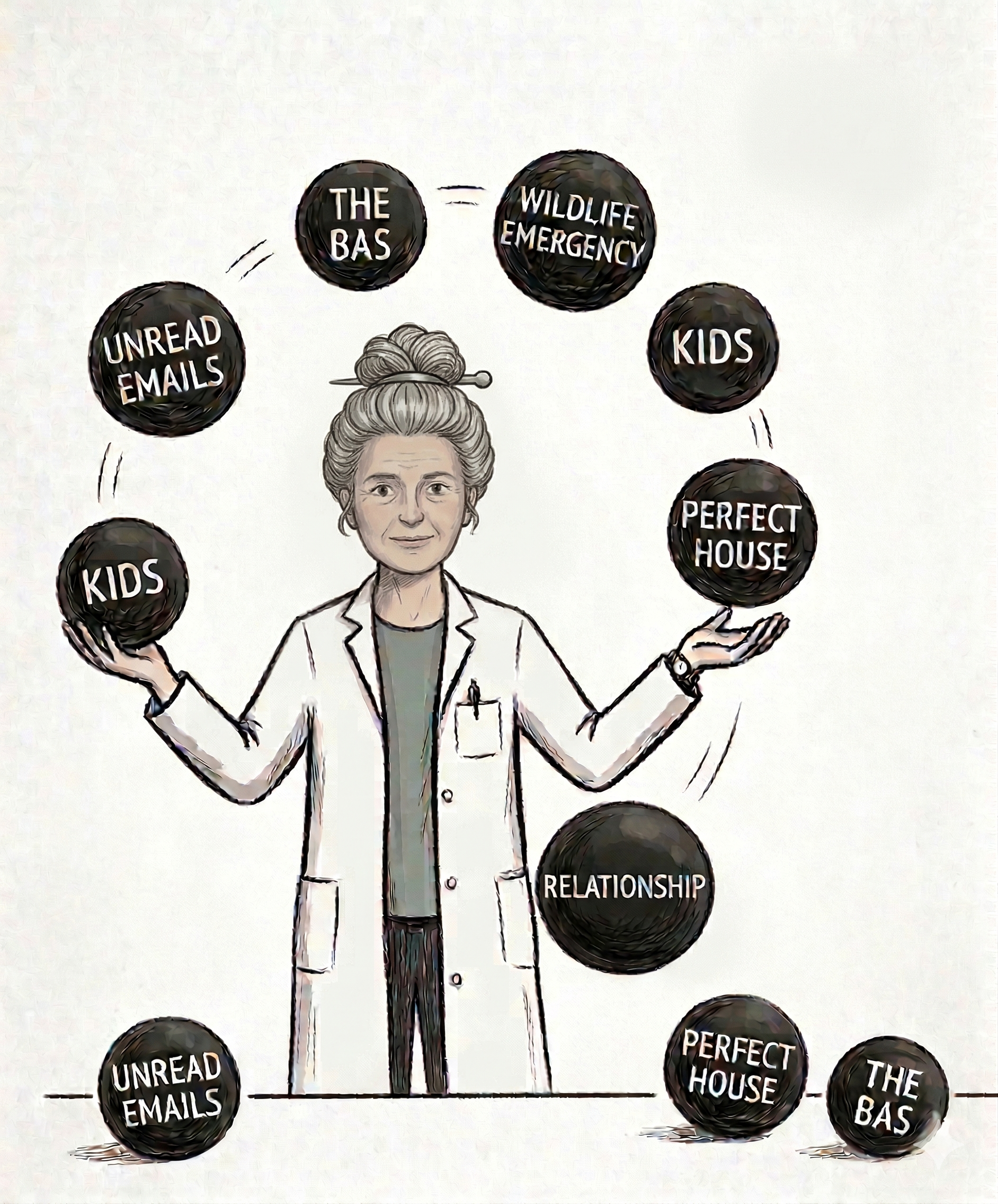
In 2023 Jill was finishing a thesis, running a working wildlife shelter, raising kids and managing a business. A physiotherapist who has spent decades working with depleted bodies, and the clinical background made it harder to see, not easier.
Little Farm of Calm is run by Jill and Darren, healthcare professionals with 50 combined years of practice, in Benalla, Victoria. Everything on this page comes from that experience and the research literature, in roughly equal measure.
See how the programme worksWhat guests say
Rated 5.0 from 80 Google reviews
Swipe →
"We had the most incredible weekend at Little Farm of Calm. I arrived completely wound up from a high-pressure job and the beautiful chaos of raising two young kids, and left feeling genuinely reset."
Hannah, Google review, 5 stars"You are my people! No welcome circles. No chanting, crystals or forced sharing as stated...PERFECT! From the moment we arrived to our goodbye was like a big warm hug. Cabins cosy and comfortable, food excellent."
Angela Jones, Google review, 5 stars"I recently spent time at the Little Farm of Calm, and it truly lived up to its name. The surroundings are absolutely beautiful, wide open spaces, fresh air, and a quietness that's hard to find anywhere else."
Amanda Majoor, Google review, 5 starsWhat you are aiming at
What 'better' actually looks like
Not transformation, and not a personality transplant. These are the things people tell us they notice first. How much of it you get, and how fast, varies with how depleted you were when you started.
- Sleeping through, and waking up like it counted
- Getting to Friday with something still in the tank
- Sunday afternoon stops having a shadow over it
- Thinking clearly enough to make an actual decision
- Having patience left over for the people you like most
- Being able to tell the difference between tired and empty
What comes next
Recovery is not a finish line
Here is the part nobody mentions. You do not recover from burnout and turn into someone who cannot burn out. Whatever took you there, the drive, the standards, the job, the caring load, the trouble saying no, is still part of you. The good bits and the less good bits arrive as a set.
Which makes staying well an ongoing job rather than a one-off fix. The closest parallel is addiction. Not because burnout is an addiction, but because the maintenance rhymes: know your early signals, take them seriously, and act before your body takes the decision out of your hands. The people who stay well are the ones who catch it early.
Re-take the assessment
Treat it as a baseline rather than a one-off. Every few months tells you which direction you are drifting.
Re-read the relapse chapter
The handbook covers catching the pattern before it catches you. That chapter is the one worth revisiting.
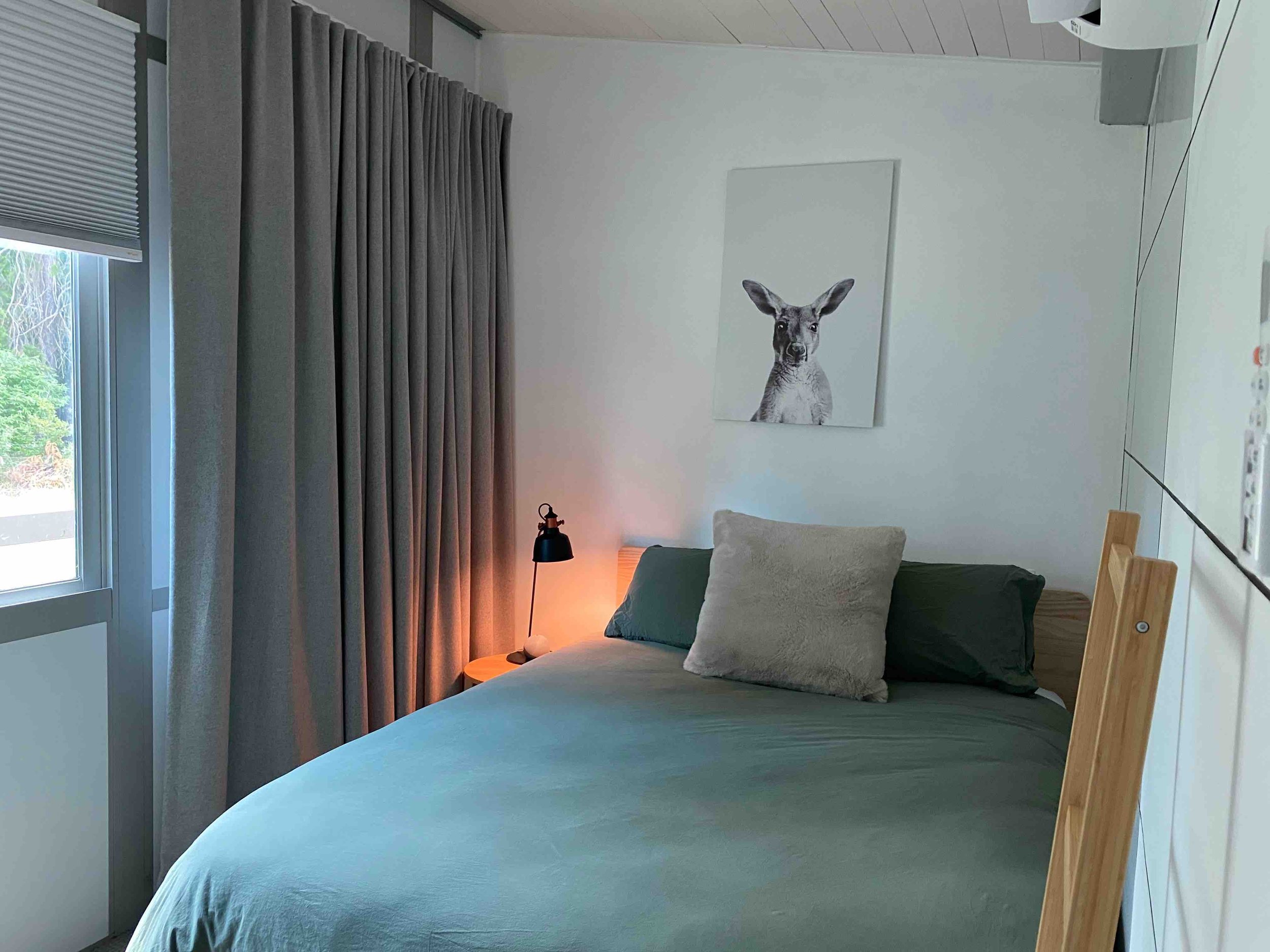
The Burnout Recovery Stay
Not a retreat. A stay. Same place, same facilities, none of the overlay. No set lunches and dinners, no programme to keep up with, no Jill and Darren hovering.
You run your prescription, or the parts of it that still work for you, at your own pace, with the farm as the backdrop. Use it to extend a retreat, or come back later when maintenance is what you need.
Open to guests who have already done a Burnout Prescription retreat.
Details coming soon.
The questions people actually ask
Burnout, answered plainly
Am I burnt out or just tired?
Tiredness responds to rest. Burnout doesn't. If you have had a decent night's sleep, a weekend, or a holiday and come back still running on empty, that is the distinction that matters most. Burnout also tends to bring cynicism and a drop in how effective you feel, not just fatigue.
What if it is not burnout at all?
Burnout is a diagnosis of exclusion. If you have done the basics for months and it is not shifting, or your symptoms are more physical than mental, it may not just be burnout — or not burnout at all. Chronic infection, low iron, thyroid dysfunction, sleep apnea and perimenopause all mimic or quietly worsen it. See If It’s Not (Just) Burnout, Then What? for the shortlist and the blood tests to ask your GP for.
Is burnout the same as depression?
No. Burnout is classified by the World Health Organization as an occupational phenomenon (ICD-11, QD85), not a mental illness. The symptoms can overlap, and the two can occur together.
If you are experiencing persistent low mood, hopelessness, or thoughts of harming yourself, that is beyond burnout and worth speaking to your GP about. In Australia, Beyond Blue (1300 22 4636) and Lifeline (13 11 14) are available any time.
How long does burnout recovery take?
Longer than a long weekend, and it varies. The honest answer is weeks to months for most people, and it tracks with how long you were depleted before you did anything about it. Anyone promising you a fixed number is guessing.
Do I need to see a doctor?
If you are in the 'running on empty' bracket, or if physical symptoms have appeared, yes. Start with your GP. Fatigue has other medical causes worth ruling out (the shortlist is here), and a GP can also look at whether a chronic condition management plan applies to you.
What actually helps?
Reducing the load, restoring sleep, regulating the nervous system, and rebuilding physical capacity in a structured way. Practically that means the unglamorous things: sleep, movement you will keep doing, time away from the environment that keeps triggering the stress response, and real recovery rather than distraction.
The handbook covers the mechanism in detail, and the library covers the evidence behind the individual pieces.
Can you fully recover from burnout?
Most people recover well. What does not happen is turning into someone who cannot burn out again. The traits and the circumstances that got you there are usually still in place afterwards, so staying well means paying ongoing attention: knowing your early signals and acting on them rather than waiting until your body forces the issue.
Where should I start?
The assessment, then the handbook. Both are free, take a few minutes, and will tell you more than another hour of reading burnout listicles. If you already know you are deep in it, look at the 5-day programme.
Two minutes now beats another six months of wondering
The assessment is private, there is no sign-up to see your result, and it will tell you which of the four doors is the right one for you.
Take the burnout assessmentEducational information only, not a diagnosis. If you are concerned about your health, speak with a qualified health professional.