I used to get up at 3am to work.
Not because I wanted to. Because it was the only uninterrupted time I could find in the day.
I thought I could handle it. I'd been busy before, and I'd always handled busy before. Handling things is something I'm good at.
But at some point, busy stopped feeling like competence and started feeling like concrete. It became harder to think. Harder to feel. Sitting at my desk unable to get three words on the page, telling myself it was just a bad week, that finishing my studies would fix it, that a few good nights' sleep would sort the rest.
They didn't.
The fatigue didn't lift. And the cruelest part: I could be in total brain fog all day, but the moment I lay down at night, every thought I hadn't been able to hold would come flooding straight back in with brutal clarity.
I'm a physiotherapist. I work with bodies and nervous systems — reading the signs, understanding the load, helping people recognise when something is wrong with them. I've helped patients identify the exact thing I was experiencing.
Yet I still didn't recognise it in myself for months.
I tried to treat the fatigue the way I'd treat an injury: reduce the load, keep moving, give it time.
It did not work.
So if you're sitting there telling yourself you're probably just tired, I'd like you to keep reading.
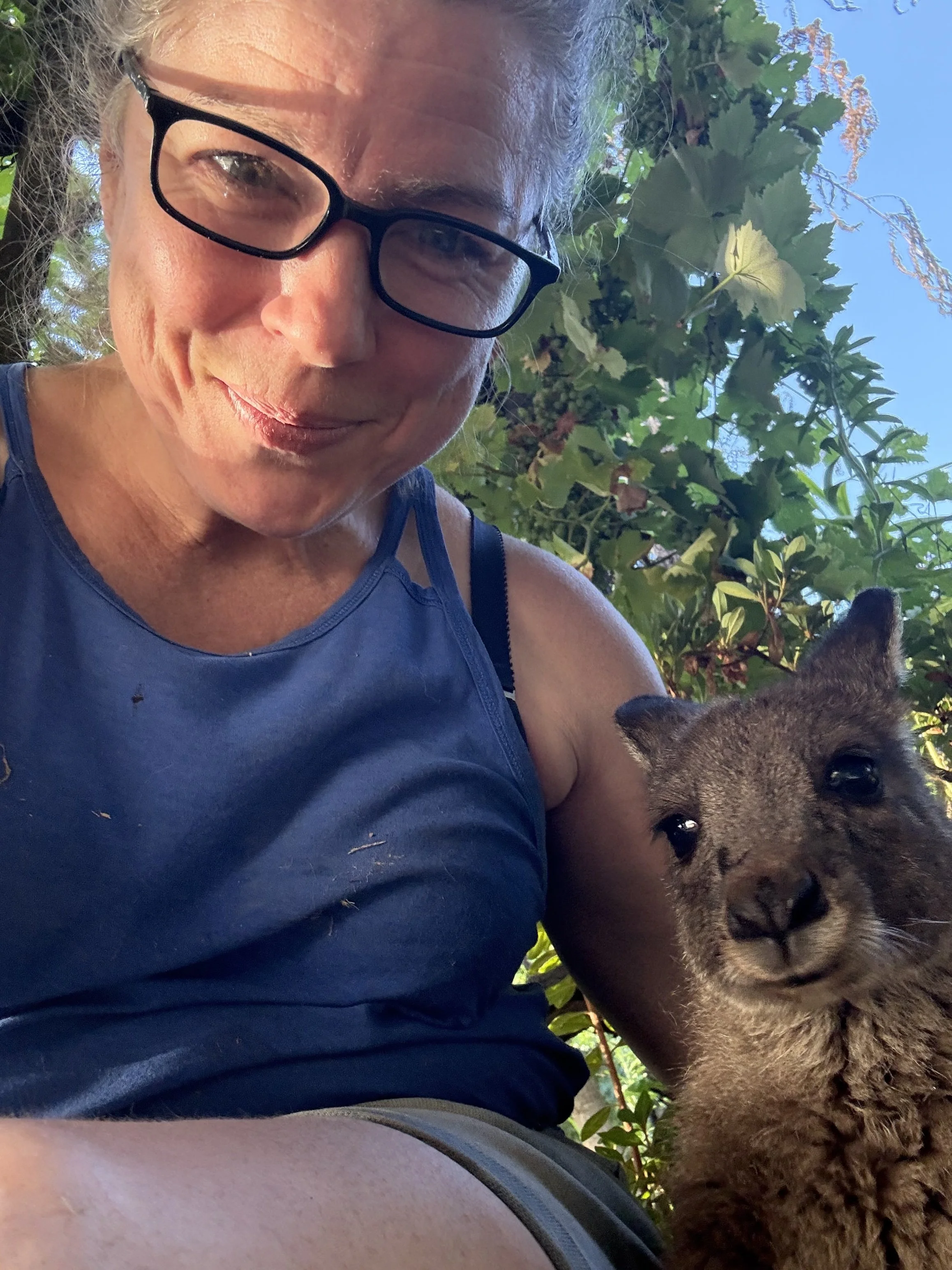
Physio, Wildlife Carer, Business Owner and Mother
Right. So what is burnout?
Not a mindset problem. Not a productivity problem. Not something you push through, journal your way out of, or fix with a bath bomb.
The World Health Organisation classified burnout in 2019 as an occupational phenomenon with its own diagnosis code. Three things happening together: emotional exhaustion, growing detachment from the things you used to care about, and a reduced sense that anything you do actually matters. Not one of those. All three.
What the evidence consistently shows is that burnout is a physiological stress response that has run too long without adequate recovery. It is in the body. Not just the head.
The body’s stress-response system is objectively and (importantly) measurably out of balance - which is why you can be completely exhausted during the day and still unable to sleep at night. The system is stuck in both directions at once.
I know this. I knew this. And I still spent months trying to will my way through it.
Why it's so easy to miss
Burnout doesn't arrive. It accumulates.
There's usually no single breaking point.
Just a slow narrowing of energy, of interest and capacity, that happens so gradually you just adapt and start calling it your new normal.
I'd stopped caring about the business – genuinely stopped caring, which is a dangerous place to be when the business is what funds everything else you do. I had decision paralysis over the most basic things. I felt pathetic for struggling when I'd handled hard things before.
That last part matters. The people who tend to get hit hardest by burnout are often the ones who have successfully juggled a lot for a long time. The over-achievers, if we're being blunt. People who are usually so good at pushing through.
That capacity becomes the very thing that works against you, because you push through the early warning signs the same way you've pushed through everything else.
And then one day you're sitting at a desk at 4am and you cannot get three words on the page, and you hate yourself for it, and you still don't call it burnout.

When it feels like you’re just going through the motions
Three things worth paying attention to
Clinical burnout assessment looks at physical exhaustion, cognitive fatigue (brain fog, can't-make-a-decision, what-was-I-just-doing), and emotional withdrawal. But there are three earlier signs that tend to get dismissed:
Recovery debt. If you feel worse after a weekend than you did before it, something's wrong. Rest isn't restorative when the underlying load is too high. My own experience with daily float sessions during recovery was one of the things that made me understand this viscerally. Floating works because it reduces sensory input to near zero, which gives the brain a genuine rest rather than just a quieter version of stimulation. There is a physiological difference.
Emotional blunting. Burnout doesn't always look like distress. Sometimes it looks like nothing at all. A flat affect, difficulty caring about things you used to love, a low-grade numbness that doesn't feel dramatic enough to do anything about.
This is the detachment component, and the research flags it as one of the strongest predictors of full burnout. I stopped caring about a business I'd built with my hands and my health. That's not a personality change. That's a clinical symptom.
Proportionality breakdown. When your reaction to a small thing feels wildly out of scale, your regulatory system is already at a deficit. The trigger isn't the problem. The trigger is just where the overflow shows up.
What moved the needle (it wasn't rest)
When I finally admitted what was happening and changed my approach, the things that helped were not the things I'd have prescribed from behind a clinical desk.
Technology off. I put a two-hour daily cap on admin and got screen time down to about an hour. No phone in the bedroom. Actual books, not a Kindle. The cognitive load of being permanently reachable and permanently scrollable is real, and cutting it made a measurable difference.
Time with the animals. Not as shelter work, which I was still doing and was definitely part of the problem. But deliberately sitting with them for the joy of it. Lying in the morning sun with a joey or a goat or a wombat with nothing to achieve and nowhere to be. The research on oxytocin and animal interaction (plus morning sunshine!) is solid. What I can tell you from the inside is that it works in a way that is genuinely different from other forms of rest.
Float and red light therapy. Daily, when I could. It remains one of the most effective tools I've found for nervous system recovery, and I say that as someone who was skeptical of anything that sounded like it belonged in a day spa.
Micro-movement. Not the gym. Not a training session. Two minutes of stretching, or a single plank. Just enough to feel connected to my physical body again. That's all. Some days that was all I had, and it was enough to be the right thing.
And permission to fail. This one is harder to explain, but it was probably the most important.
I let the BAS go. I didn't return phone calls or emails. I paid bills late. And I let that be okay for a period, because the expectations we put on ourselves are so much a part of the burnout problem. We can never meet all of them. Trying to is often what put us there. So I gave myself permission to not meet them, to fail at them, to just not do them. Because the alternative, at that point, was somewhere I didn't want to go.
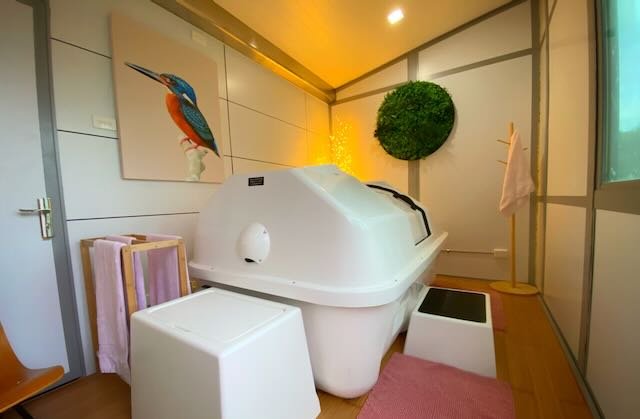
A week of daily float therapy was my lifeline. I was forced to switch off.
Where do you sit?
That's the honest question and most people don't know the answer. Because we habituate to our own baselines so effectively that "normal" starts to mean "whatever I've been feeling for the past six months."
That's why we built a proper check.
The Burnout Check is a free, 2-minute, 10-question self-assessment adapted from the Copenhagen Burnout Inventory and Perceived Stress Scale. It was built by the same clinicians who run this place: an AHPRA-registered Physiotherapist and an ESSA-accredited exercise physiologist. It scores you across four levels and gives you specific, evidence-based strategies matched to where you land.
It's not a clinical diagnosis. But it gives you a real picture, from real tools, built by people who know what they're looking at.
Why we built LFOC the way we did
My own experience has made me want to take more out of our retreats, not put more in.
The over-achievers, the ones who need it most, are also the ones most likely to turn a retreat into another performance. Another thing to do well. Another checklist to complete.
So this year we are shifting our focus to offer a 5-Day Burnout Prescription (starting in June 2026) which provide a more structured approach based upon a clinical protocol for Burnout Recovery; AND more genuine unstructured time built in. Time for doing whatever the hell you feel like doing, including having a nap.
I love naps. I wish I could take more.
The evidence-based wellness treatments (float, red light, sauna, cold plunge, hydrotherapy spa, massage etc) are there because I know, from my own body, what they do to accelerate recovery. The animals are there because sitting in morning sun with goat staring at you is not an amenity. It's a physiological input, and one the research takes seriously even if wellness brochures have borrowed the language and emptied it of meaning. The movement sessions are there because well-designed movement that helps you feel pain free, beats a punishing every time. The food is there because your nervous system is trying to rebuild and it needs fuel that tastes good without spiking your blood glucose levels all over the shop.
We built this retreat because I couldn't find what I needed when I needed it. If any of what I've described sounds familiar, come and find out where you actually sit.
No email required.